Sump Pump Repair & Installation in Mission Viejo, CA
Failed, noisy or stuck sump pumps repaired or replaced, with battery backup, check valves and discharge lines checked and the price quoted before work.
- Repair or replace options
- Battery backup installs
- Price before work
- 24/7 call line
Sump Pump Repair and Installation in Mission Viejo
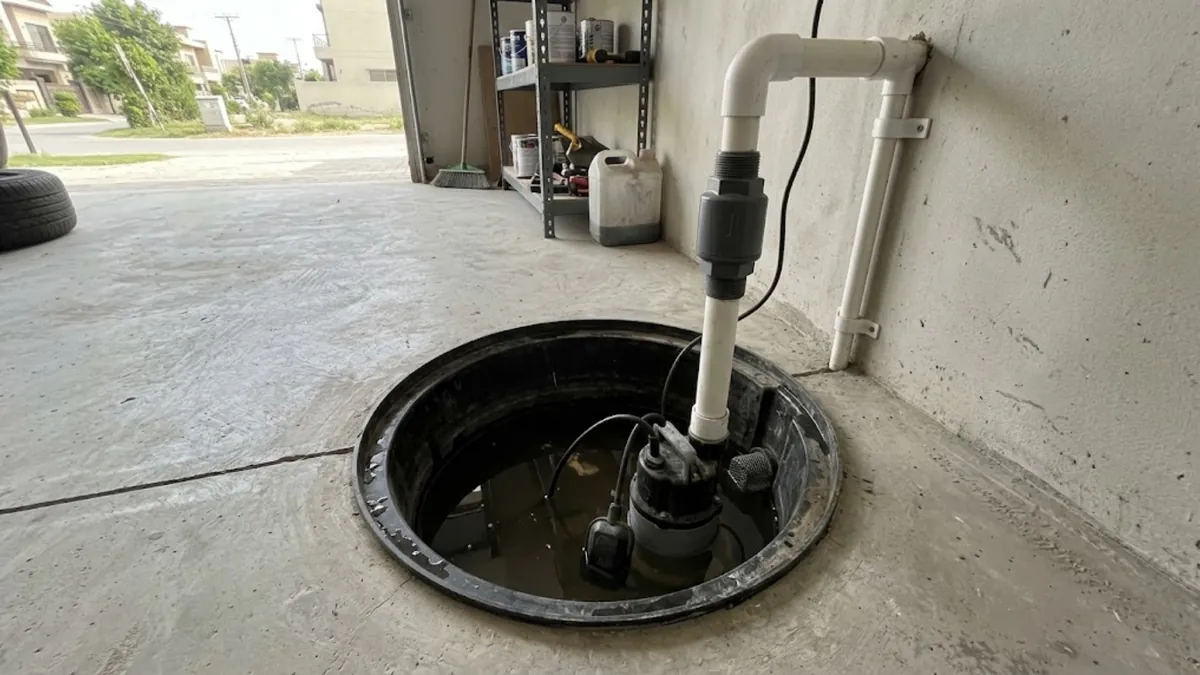
A sump pump sits in a pit, called a basin, cut into the lowest part of a garage, crawlspace or lower level. When groundwater rises into the basin, a float switch starts the pump and pushes the water out through a discharge pipe to a place where it can drain safely.
Mission Viejo is not a basement city, so many homes have no sump at all. The ones that do are usually on sloped lots, below retaining walls, in lower-level rooms or in crawlspaces, where the original plan put roads in the valleys and houses on the hills and water follows the grade. When one of those pumps fails during a storm, the garage or lower level takes the water within the hour.
We repair the pumps that are already there, replace the ones that have reached the end of their life, and add backups where one pump is all that stands between the rain and the floor.
Sump Pump or Sewage Ejector Pump: Which One Do You Have?
A sump pump handles clear groundwater and rain that collects around the foundation. A sewage ejector pump is a different machine. It sits in a sealed, vented basin and lifts toilet, shower and laundry waste from a fixture below the level of the sewer line up to the drain.
The difference matters for repair and for code. Clear groundwater may not be sent into the sanitary sewer or a septic system under the California Plumbing Code, built on the Uniform Plumbing Code (UPC), and has to leave through an approved discharge. A sewage ejector discharges to the sewer and needs a sealed lid, a check valve and a vent. Mixing the two up is a common source of smells and failed inspections.
If you are not sure which one you have, look at the lid. A sealed, bolted lid with a vent pipe is an ejector. An open or loosely covered pit with a single discharge pipe is a sump.
Signs Your Sump Pump Is Failing
The motor hums but no water moves
A jammed impeller, a clogged intake or a failed check valve keeps the pump from lifting water.
It runs nonstop or cycles every few seconds
A stuck float, a missing check valve or a high water table keeps the switch calling for power.
It does not start in heavy rain
A dead float switch, a tripped breaker or a pump that has simply worn out will fail when it is needed.
Loud grinding, rattling or vibration
Debris in the pit or a worn bearing shortens the life of the pump.
Standing water or a musty smell near the pit
Water reaching the floor or rust on the housing means the basin is overwhelmed or the pump is old.
What to Do While You Wait for the Plumber
- Unplug the pump if it smokes, smells burned or keeps tripping the breaker, and do not stand in water to do it.
- Move boxes, cardboard and electronics off the floor near the pit and away from the path of the water.
- Open the lid and look for obvious blockage such as gravel, paper or a stuck float, without reaching into water near a plugged-in pump.
- Check that the discharge pipe outside is open and not buried, frozen shut or kinked, and that the water is leaving the property.
- Photograph the pit and any damage before cleanup, since an insurance claim will ask for it.
How We Find Out Why the Pump Stopped
| Check | What the plumber does | What it tells us |
|---|---|---|
| Power and breaker | Confirms the pump has a live, protected circuit and a working outlet | Rules out a simple electrical cause before parts are replaced |
| Float switch | Lifts the float by hand and watches the pump start and stop | Finds a stuck, tangled or worn switch |
| Impeller and intake | Pulls the pump and clears debris from the screen and impeller | Separates a clog from a failed motor |
| Check valve | Tests that water does not fall back into the basin after each cycle | A bad check valve makes a pump short cycle |
| Discharge line | Follows the pipe to the outlet and checks the slope and the end point | Confirms water leaves the property and does not return |
When a Pump Is Worth Repairing
A stuck float, a clogged intake or a failed check valve is usually a quick repair, and the pump goes back in service the same visit. A pump with a burned motor, a cracked housing or rust through the case is past repair, because a new one costs little compared to the water it protects against.
Sump pumps are commonly cited as lasting around 7 to 10 years under regular use, so one of that age that fails in a storm is a replacement conversation, not a repair one. Replacing it before the rainy season is cheaper than replacing it during one.
Replacement also gives a chance to correct the basin. A loose, shallow or debris-filled pit shortens a pump's life, and a new one can be set on a solid base with a proper check valve. For leaks caused by a failing line instead of groundwater, leak detection finds the source first.
Battery Backup and the Second Pump
Storms that fill a sump are often the storms that knock out power. A battery backup system, or a second pump set slightly higher in the basin, keeps water moving when the main pump or the grid fails. A water-powered backup is another option, though it depends on water pressure and is not allowed everywhere.
We size a backup to the basin and the discharge line, check the battery date and the charger, and test the alarm. An alarm that sounds when the water rises is the cheapest part of the system and the one most often missing.
Where the Water Goes and What the Code Says
The discharge line should carry water away from the foundation, not onto a neighbor's property and not into the sanitary sewer. Groundwater is clear water, so it belongs in an approved stormwater discharge such as a lawn, a landscaped slope or the street gutter where the local jurisdiction allows it. Rules vary by city and by lot, so check with the City of Mission Viejo or your association before changing a discharge.
A check valve on the line keeps water from flowing back into the basin, and the line should end where the water can spread out. A pipe that dumps water beside the house just feeds the same pit again, which is why a long discharge matters on a hillside.
Which Mission Viejo Homes Have Sump or Ejector Pumps
Pumps are most common in homes with a lower level cut into a slope, a basement-style room, a below-grade bath or a crawlspace that collects runoff. Homes on slopes, such as those in Pacific Hills in the north of the city or on the hillside streets near Lake Mission Viejo, sit where water naturally moves downhill, and a pump is one way an owner handles it.
Many other homes use French drains, area drains and gutter downspouts to move water instead, and those lines can clog the same way. If water pools by the garage door in every storm, ask about drain cleaning for the yard drains before adding a pump.
In older tracts such as Casta del Sol and the first Deane Homes streets of 1966, slab foundations mean water that enters tends to show up as damp flooring, not as a pit. In that case, slab leak detection separates a plumbing leak from groundwater.
Getting a Pump Ready for the Rainy Months
Southern California storms arrive in the winter months and can bring heavy rain in short bursts. A pump that sat idle through the dry months may have a stuck float or a dry seal, so test it before the first storm by pouring a bucket of water into the basin and watching it start, empty and shut off.
Clear the discharge line, check the backup battery date, and make sure the outlet is on a protected circuit. If water has already reached finished floors, water damage restoration handles the drying, and a burst or failed pressure line is covered under burst pipe repair.
What Sump Pump Work Costs
A float switch or check valve repair costs far less than a full replacement with a new basin and backup. The price depends on the pump type, the basin condition and how far the discharge line has to run, and you hear it before work begins.
Many homeowners policies exclude groundwater and sump pump overflow unless a water backup endorsement has been added. Read your policy before a storm, since a sudden pump failure may be covered only with that endorsement.
When a Sump Pump Problem Is Really Something Else
Water in a garage is not always groundwater. A leaking water heater, a failing supply line or a backed-up floor drain can look the same at first. A sewer camera inspection checks the main line if the water is coming up through a drain.
We also serve nearby areas, including Ladera Ranch and Rancho Santa Margarita, with the same 24/7 line.
Sump Pump Questions From Mission Viejo Homeowners
Many do not. A pump is common in homes with a lower level, a crawlspace or a garage below a slope that collects water. If you see standing water near a wall after rain, ask for a visit before adding one.
A pump is commonly cited as lasting around 7 to 10 years under regular use. A pump that rarely runs may last longer, and one that runs constantly may wear out sooner.
The usual causes are a clogged intake, a jammed impeller or a failed check valve. A technician can clear or replace the part, and the pump goes back to work the same visit.
Generally not. Clear groundwater has to go to an approved stormwater discharge under the California Plumbing Code, while a sewage ejector sends waste to the sewer. Check with your city for the allowed outlet.
During a storm, yes. Water rising into a garage or lower level damages floors and stored items within hours, so call the 24/7 line and move belongings off the floor.
Water Rising Where It Should Not?
Call the 24/7 Mission Viejo line and tell us whether the pit is full, silent or running.
☎ Call (949) 325-3122