Burst Pipe in Mission Viejo: Your First Hour, Step by Step
The first hour decides how much of the house gets wet. Here is the order that works.
Key Takeaways
- Close the main water shutoff first. Everything else can wait for the water to stop.
- Drain the lines by opening the lowest faucet, and turn off the water heater.
- Photograph the damage before you move anything, then call a plumber.
- The EPA advises drying wet materials within 24 to 48 hours to prevent mold, so call for drying help the same day.
What a Burst Pipe Does in the First Hour
A broken supply line under normal household pressure can put out a great deal of water quickly. The water spreads through drywall, soaks into flooring, wicks up cabinet bases and runs under walls into rooms that look dry. The sooner it stops, the less has to be torn out later.
Most bursts in Southern California do not come from freezing. High street pressure, aging copper, impact damage and water hammer are more common here. The Uniform Plumbing Code (UPC) calls for a pressure regulator where supply pressure exceeds 80 psi, so a failed regulator is worth checking after any burst.
The checklist below follows the order of events, from the first minute to the first hour. Keep it where you can find it, because a burst pipe is not the time to search for the shutoff.
Minutes 0 to 5: Stop the Water
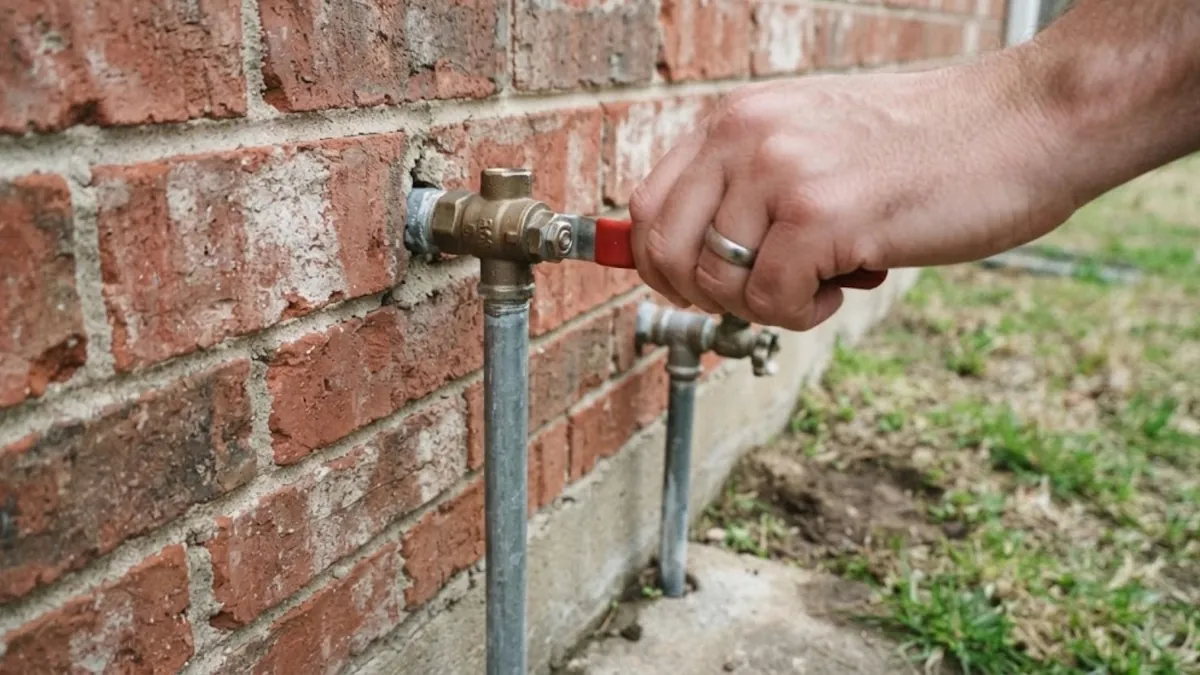
- Close the main water shutoff. It is often near the front of the house, on an exterior wall or in a box at the curb.
- If the main will not turn, close the customer valve at the meter. Do not use tools on the district's valve.
- Open the lowest faucet in the house to drain the remaining water out of the lines.
- Turn off the water heater, since a heater with no inflow can overheat. Set a gas unit to pilot or off, or switch off an electric unit's breaker.
Minutes 5 to 15: Stay Safe and Document
- Stay out of standing water if outlets, cords or appliances are in it. Switch off power at the panel only if you can reach it from dry ground.
- Move people and pets away from wet areas and check for sagging ceilings.
- Photograph and video every wet area, the burst pipe and the damaged belongings before you move anything.
- Write down the time you found the leak and the time you closed the shutoff.
- Lift rugs, move furniture off wet carpet and take electronics to a dry room.
Minutes 15 to 60: Call, Dry and Report
- Call the 24/7 plumbing line and tell dispatch the pipe location, what is wet and whether the main is closed.
- Call your insurance company's claims line and report the loss. Ask what they require before repairs begin.
- Ask your plumber whether the pipe will be repaired the same visit, and when drying equipment can start.
- Start removing water with towels, mops and a wet vacuum if it is safe, and run fans to move air.
- Save the broken pipe section if the plumber removes it, and keep receipts for everything you spend.
Quick Reference for the First Hour
| Do | Do not | Why |
|---|---|---|
| Close the main shutoff | Hunt for the burst first | Every minute of running water adds damage |
| Photograph first | Throw damaged items out right away | Your insurer needs to see what was lost |
| Open windows and run fans | Use a household vacuum on standing water | Moving air helps drying, and electric vacuums are not wet-rated |
| Call a plumber and your insurer | Wait to see if it dries | Damp materials grow mold in one to two days |
What Happens Next: The Repair and the Drying
The plumber replaces the broken section and pressure tests the line. Our burst pipe repair page explains the repair methods and what sets the price. If several leaks have appeared in a short time, the plumber may recommend replacing the line.
Drying is a separate job. Wet drywall, insulation and flooring hold moisture after the pipe is fixed, which is where water mitigation comes in. Mitigation starts the drying clock and limits how much has to be removed, and water damage restoration covers cleanup and repairs afterward.
The EPA advises drying wet materials within 24 to 48 hours to prevent mold, so waiting a few days to see what happens is the wrong call.
Talking to Your Insurer
Many homeowners policies cover water damage from a sudden event, such as a burst pipe, while excluding slow leaks and wear. The pipe itself is often excluded, and the damage it caused is often covered. Read your policy or ask your agent, and report the loss promptly.
Most policies also expect you to take reasonable steps to prevent further damage, which means stopping the water and starting to dry. Keep every receipt for those steps. If you live in a condominium, tell your HOA at once, because the association's master policy and your own policy divide the claim depending on where the water started.
Homes in nearby Laguna Niguel follow the same rules, and the 24/7 team covers both cities.
When the Burst Is Upstairs, in a Wall or Outside
If the burst is on a second floor, water follows gravity and shows up as a ceiling stain, a bulge or a drip below. Do not poke a bulging ceiling with your hand. Place a bucket under it, then puncture it carefully from the side to let it drain in a controlled way, and keep clear of light fixtures.
If the pipe is inside a wall, you may only hear running water or see a damp patch growing on drywall. Closing the main stops it, and a moisture meter or thermal camera finds the wet extent before anyone cuts the wall. A plumber should open the wall in the smallest way that gets to the break.
If the burst is outside, such as a hose bib or an irrigation line, the main shutoff still works, but you may also be able to close a smaller valve and keep water on in the house. A damaged underground line is different. If the yard is soaking and the meter is spinning, the break is probably on the buried service line.
Burst Pipe Questions
Close the main water shutoff, open the lowest faucet to drain the lines and turn off the water heater. Then photograph the damage and call a plumber.
Often near the front of the house on an exterior wall or in a box at the curb. Find it now and make sure it turns.
Only if you can reach the panel from dry ground. If water is near outlets and the panel is in a wet area, leave it and call for help.
Within one to two days. The EPA advises drying wet materials within 24 to 48 hours to prevent mold.
Pipe Burst Right Now?
Call the 24/7 Mission Viejo line after you close the main shutoff.
☎ Call (949) 325-3122