Water Mitigation in Mission Viejo, CA
The first hours of a water loss: stopping the spread, removing standing water, protecting what can be saved and starting the drying clock.
- 24/7 emergency response
- Extraction first
- Protects salvageable materials
- Documented for insurance
Emergency Water Mitigation in Mission Viejo
Water mitigation is the set of emergency actions taken right after a water loss to stop damage from getting worse. It includes stopping the source, removing standing water, setting up drying equipment, protecting contents and documenting conditions. It is the first phase of a loss, and restoration follows it.
That is the difference from water damage restoration, which covers the full process through repairs and rebuild. Mitigation is about time. A drywall wall that is dried in place within a day or two may need no replacement, while the same wall left wet for a week usually does.
What Happens in a Mitigation Call
Control the source
The water is shut off or the leak is contained so no new water enters.
Extract
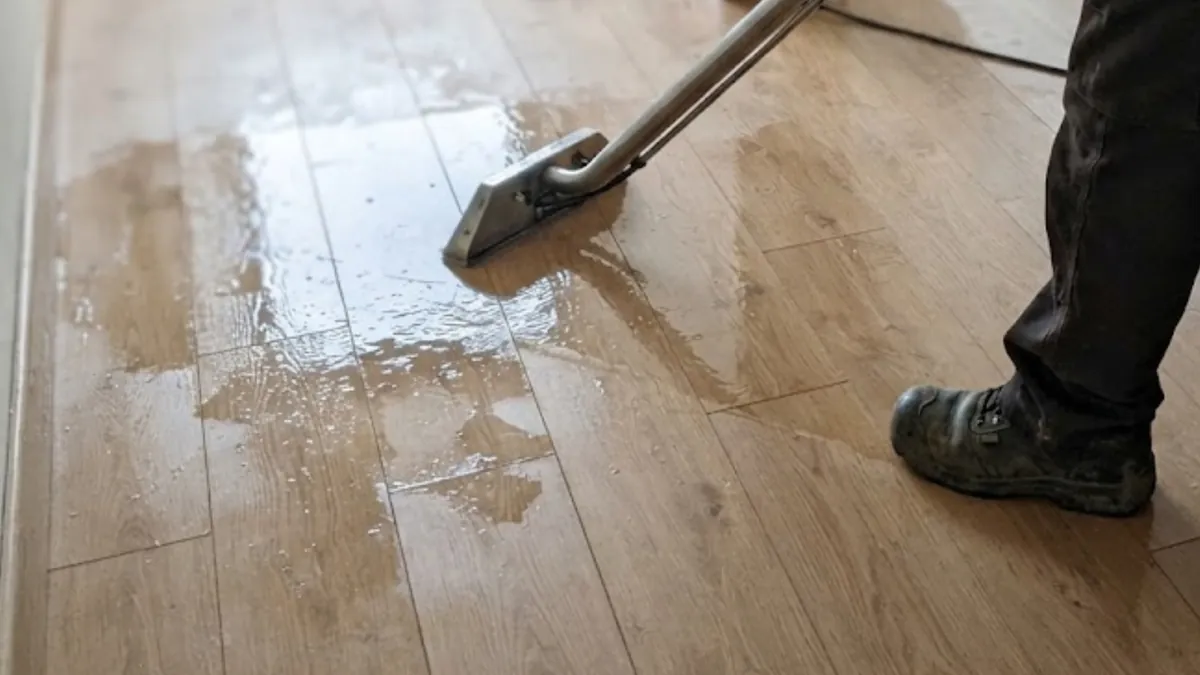
Pumps and wet vacuums remove standing water from floors and low spots.
Protect
Furniture is blocked up, contents are moved and unaffected rooms are shielded.
Dry
Air movers and dehumidifiers start, and moisture readings set a baseline.
What Gets Done First and Why
| Action | Why it comes first | Delay costs |
|---|---|---|
| Stop the source | New water adds to every other problem | More area wet and more drying time |
| Remove standing water | Water wicks into walls and subfloors | Wider spread and more removal |
| Open or lift materials | Trapped moisture cannot evaporate | Mold risk and hidden decay |
| Set drying equipment | Air movement and dehumidification dry the structure | Longer equipment days and higher cost |
What to Do Before Help Arrives: Safe Steps
- Close the main water shutoff if the source is a supply line, and shut the valve to an appliance if that is the cause.
- Turn off the water heater if it is leaking, and switch off power to wet rooms only if you can reach the panel safely.
- Pull up rugs, lift furniture off wet carpet and move valuables to a dry room.
- Open windows if the weather allows, and run fans and the air conditioner to move air.
- Take photos and video of every wet area, and write down when the water started.
Mitigation Practice and the IICRC S500 Guide
Professional mitigation follows the IICRC S500 Standard and Reference Guide for Professional Water Damage Restoration, which classifies water by contamination category and by how much material is wet. Ask a crew whether it follows S500 and whether its technicians are IICRC certified.
Clean water becomes contaminated in a day or two if it sits. The EPA advises drying wet materials within 24 to 48 hours to prevent mold, so mitigation targets that window.
Mitigation does not replace the plumbing repair. If a pipe failed, burst pipe repair fixes the line, and leak detection finds a hidden source.
Mitigation in Mission Viejo's Homes
Single-story homes on slabs, common across the city, spread water outward across the floor. Baseboards, cabinet kicks and flooring edges wick it up, so mitigation includes pulling baseboards and drying cavities behind them.
In gated associations such as Casta del Sol and Palmia, tell the management office right away, since master policies and building access rules may apply. Photos, times and a list of damaged items are the three records that help most.
Garage water heaters, supply lines behind washing machines and pinhole leaks in hot water lines are frequent sources. The same crew that starts mitigation can point you to the plumbing repair that stops the cause.
What Water Mitigation Costs
Mitigation is priced by the work needed to stabilize the loss: extraction time, number of rooms, equipment days and any materials that must be removed to dry the cavity behind them.
Most homeowners policies expect you to take reasonable steps to prevent further damage, and mitigation costs are often covered when the loss itself is. Keep every invoice and photo, and call your insurer early.
After Mitigation
Once the structure is dry, the next step is repair, covered on the restoration page. If a failing pipe caused the loss, a conversation about repiping may be worth having after the repair.
We respond to losses in nearby Rancho Santa Margarita as well.
Where We Work Across Mission Viejo
Mitigation in Mission Viejo starts with the water source, whether a failed hose in a Palmia kitchen, a heater leak in Casta del Sol or a roof leak in a Painted Trails two-story. The crew reaches the whole city using Crown Valley, Marguerite, Oso and Alicia Parkways as main routes.
Water Mitigation Questions
Mitigation is the emergency phase that stops the spread and starts drying. Restoration is the full process, including cleaning and repairs.
As soon as possible. The first 24 to 48 hours decide how much can be dried in place instead of removed.
If the loss is covered, mitigation usually is too, and most policies expect you to prevent further damage. Check your policy and keep every record.
Often no, though the equipment is loud and some rooms may be sealed off. Sewage losses may require leaving.
You can remove standing water, lift rugs and run fans. Larger jobs need commercial equipment and moisture readings.
Water Spreading Through the House?
Call the 24/7 Mission Viejo line. The sooner drying starts, the less has to be replaced.
☎ Call (833) 521-1033