Winter Storm Plumbing Checklist for South Orange County Homes
South Orange County gets most of its rain in a few months. A short checklist before the first big storm can prevent a flooded floor.
Key Takeaways
- Heavy rain raises groundwater and loads sewer systems, and a weak lateral is often the first place a surge appears.
- A cleanout, a camera check and clear drains and gutters are the cheapest protection.
- Standard homeowners policies usually exclude sewer backup and flood unless you add coverage.
- If sewage backs up, stop using water and keep people and pets away.
What a Wet Winter Does to Your Plumbing
South Orange County gets most of its rain between late fall and early spring, in a handful of storms. After a long dry stretch, the first heavy rain finds every weak point at once. Gutters overflow, soil saturates and water seeps into older sewer joints that were dry for months.
Sewer systems feel it as extra flow, and a lateral with cracks, roots or a low spot is the first to back up. The result shows up in the lowest drain in the house, often a shower, tub or floor drain, as water that has nowhere else to go.
Hillside tracts add their own risks. Homes below a slope can see runoff against foundations and garage doors, and sloped lots can send water toward cleanouts and yard drains that are clogged with leaves.
The Pre-Storm Checklist, Inside the House
- Run each drain for a minute and watch for slow or gurgling fixtures, which flag a partial clog.
- Check the water heater for leaks and confirm its strapping, since storms sometimes come with power outages and shaking.
- Locate your main water shutoff and make sure it turns.
- Look under sinks for damp cabinet bases that suggest a slow leak.
- Keep a flashlight, towels and a bucket where you can reach them.
The Pre-Storm Checklist, Outside the House
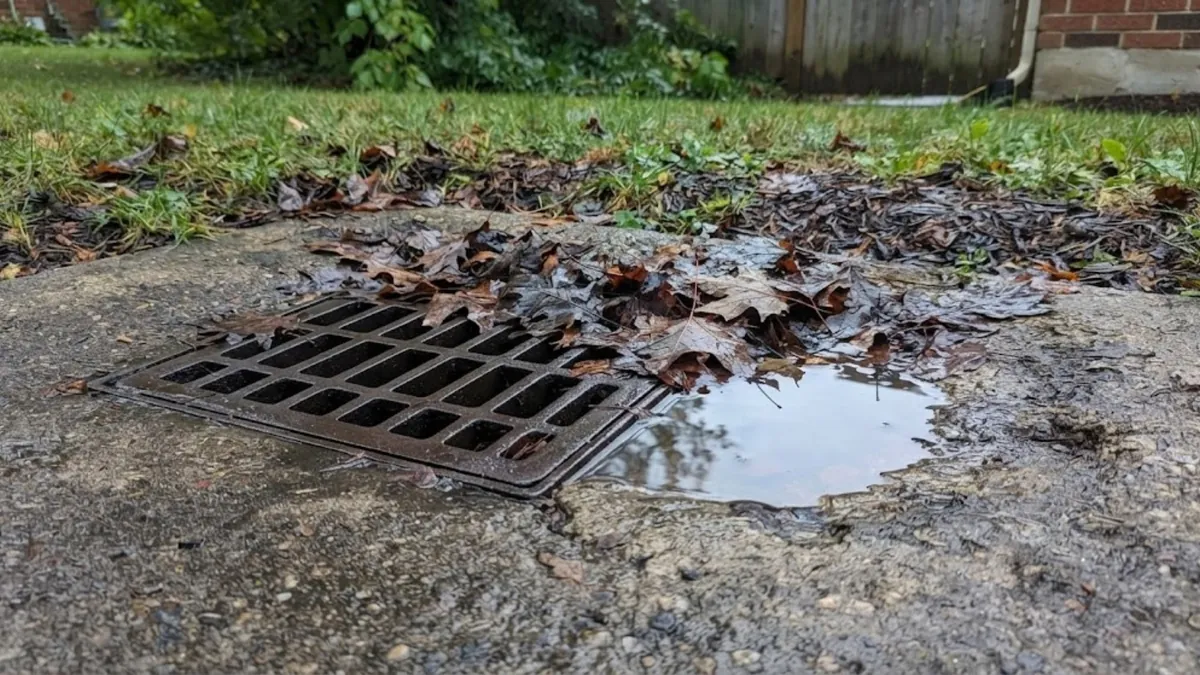
- Clear leaves from gutters, downspouts, yard drains and catch basins on your lot.
- Make sure downspouts discharge away from the foundation and not toward the garage door or a cleanout.
- Find your sewer cleanout, often a capped pipe near the house, and keep the cap in place and the area clear.
- Check slopes and planters for drainage that points at the house.
- If you irrigate, switch the controller to rain mode or off so zones do not run during the storm.
Where Storm Plumbing Problems Usually Start
| Weak point | What happens in a storm | Fix before the season |
|---|---|---|
| Cracked or rooted lateral | Extra flow backs up into low drains | A camera inspection, then repair or lining. See sewer camera inspection |
| Clogged cleanout or yard drain | Water pools against the house | Clear debris and test the flow |
| Blocked main line | Slow drains and gurgling toilets | A cable or jet pass. See drain cleaning |
| Garage threshold and slab edge | Runoff seeps under the door | Regrade or seal the edge |
| Old irrigation valve boxes | Flooded boxes hide a leak | Inspect before and after rain |
What to Do if Sewage Backs Up During a Storm
Stop using water immediately. Every flush and every load of laundry adds to the backup. Keep children and pets out of the affected area, and avoid contact with the water, since it carries bacteria. Wear rubber gloves and boots if you must handle anything, and wash your hands afterward.
Photograph the damage before cleanup and call your insurer. Standard homeowners policies often exclude sewer or drain backup and outside flooding, so ask about a water backup endorsement and a separate flood policy before the season. After a backup, water damage restoration handles the removal and disinfection, and a plumber clears and inspects the line.
If the backup is in your lateral, a camera run shows the cause. If it is in the district's main in the street, the district needs to know. Santa Margarita, Moulton Niguel and El Toro Water Districts serve parts of Mission Viejo.
Storms, Outages and the Water Heater
A storm that cuts power can trip a gas water heater's controls or leave an electric one cold. Do not relight a pilot if you smell gas. If you do, leave the house and call 911 or SoCalGas at 800-427-2200 from outside.
After a power outage, check for leaks when the water returns, since pressure changes can expose weak joints. If the water looks cloudy or discolored after a storm, run a cold tap for a few minutes. Call your district if it persists, and ask about the report on your water supply.
Hillside and Newer Communities
Newer master-planned areas, such as Ladera Ranch, are designed around central drainage and biofiltration, so the main risks are clogged inlets, irrigation leaks and garage thresholds. Older areas lean toward the lateral and cleanout problems above.
In both, a pre-season check costs far less than a mid-storm emergency. The 24/7 line is open all winter for the calls that cannot wait.
After the Storm: What to Check Within a Day
- Run each drain and flush each toilet, then watch for gurgling or slow flow.
- Walk the yard and garage for pooled water, and look for soggy ground near the cleanout or the meter.
- Check the meter for movement with all fixtures off, since saturated ground can hide a service line leak.
- Look at ceilings and walls for new stains, especially under roof valleys and bathrooms.
- Photograph any damage and note the date, since a pattern helps with insurance and repairs.
The Cost of Waiting Until the Storm
Plumbers get far more calls during a storm than in a dry week, and a sewer backup at night in the rain is the hardest time to arrange a visit. A camera look in October or November can take an hour and lets you plan a repair on your schedule.
The same is true for water heaters, supply valves and old hose bibs. A small drip is easy to fix on a dry afternoon. During a storm, you may be working around floodwater and a long waiting list.
Storm Plumbing Questions
Rain loads the sewer system with extra flow and seeps into joints. A lateral with cracks, roots or a low spot is the first place a backup appears.
Often not. Backup of sewers and drains, and flooding from outside, usually need an endorsement or a separate policy. Ask your insurer before the season.
Yes. Make sure the cap is in place, the area is clear and you know where it is, since a plumber may use it to clear or inspect the line.
Move belongings off the floor, sweep water outward and note the time. Regrading or sealing the threshold after the storm helps prevent a repeat.
Storm Backup or Flooding?
Call the 24/7 Mission Viejo line. Stop using water and keep clear of sewage.
☎ Call (949) 325-3122