Tank vs Tankless Water Heaters in Mission Viejo: Hard Water, Gas Lines and Air Rules
The right heater depends on your household, your gas line and your water. Here is how the two types compare in this area.
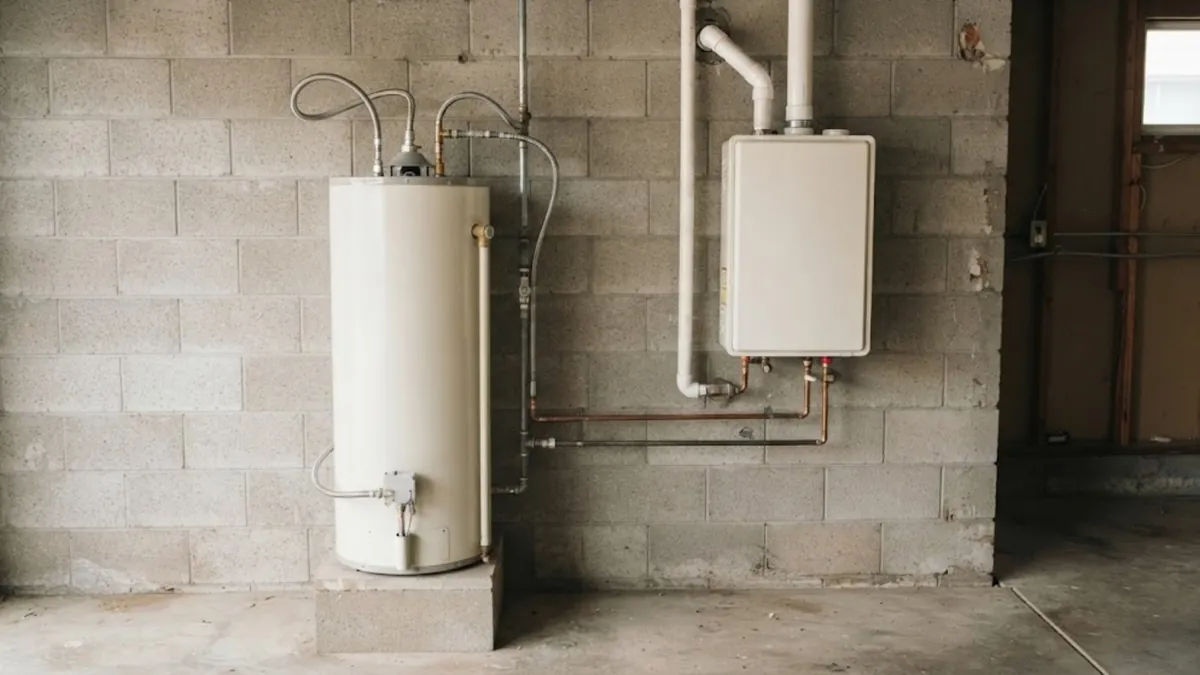
Key Takeaways
- The U.S. Department of Energy says tankless units last more than 20 years, against 10 to 15 years for storage tanks.
- Tankless heaters can be 24 to 34 percent more efficient for homes using 41 gallons or less of hot water a day, and 8 to 14 percent for homes using about 86 gallons.
- Santa Margarita Water District reports about 15 grains per gallon of hardness, so scale control matters for either type.
- Southern California air-quality rules for gas water heaters are changing, so confirm the current status before you buy.
How the Two Types Differ
A storage tank heater keeps 30 to 80 gallons of water hot all day, so hot water is ready the moment you open a tap. A tankless heater heats water only when you ask for it, using a burner or element that fires as water flows. Tankless units typically deliver 2 to 5 gallons per minute, according to the Department of Energy.
That flow limit is the first thing to size. A household that runs a shower, a dishwasher and a washing machine at the same time may need a larger unit, or two units, so cold water does not surprise someone mid-shower.
The Department of Energy says tankless heaters avoid the standby heat loss of a storage tank. It also says demand heaters cost more than conventional tanks, which is where the payback calculation starts.
Tank vs Tankless, Using Department of Energy Figures
| Factor | Storage tank | Tankless |
|---|---|---|
| Typical life | 10 to 15 years | More than 20 years with maintenance |
| Energy use | Baseline, with standby heat loss | 24 to 34 percent less at 41 gallons a day or less, 8 to 14 percent less at about 86 gallons |
| Upfront cost | Lower | Higher, since the unit, venting and gas line often cost more |
| Hot water supply | Limited to the tank, then a recovery wait | Continuous, within the flow rating |
| Space | Floor space in a garage or closet | Wall mounted, frees the floor |
| Maintenance | Yearly flush, anode rod check | Yearly descaling flush |
Why Mission Viejo's Water Changes the Math
Santa Margarita Water District's 2026 report lists average hardness of 15 grains per gallon, which the USGS scale calls very hard. That hardness leaves scale on tank bottoms and inside the narrow passages of a tankless heat exchanger.
A tank handles scale with a yearly flush and anode rod checks, and it makes noise before it fails. A tankless unit needs a yearly descaling flush, and skipping it can trigger error codes and shorten its life. Either way, a water softener protects the investment, and our softener page explains the local rules to check first.
If you choose tankless, ask for isolation valves at installation. They make the yearly flush simple, and our tankless service page describes what that visit includes.
Gas Lines, Venting and Permits
A tankless gas heater draws more gas for a short time than a tank does, because it must heat cold water instantly. Many homes need a larger gas line or a new meter-side regulator, which our gas line page covers. Venting is different too, and many tankless units use direct-vent or condensing designs with their own pipe and condensate drain.
Either type needs a permit and inspection in California. Tank heaters must also be braced against earthquakes under Health and Safety Code section 19211. Ask your plumber to put gas sizing, venting, strapping and the permit in writing before you sign.
What Is Changing for Gas Water Heaters in Southern California
The South Coast Air Quality Management District, which covers Orange County, amended Rule 1146.2 in 2024 to require zero-emission replacements for larger and commercial gas water heaters on a phased schedule that starts in January 2026. The district says that rule does not regulate residential gas tank water heaters, which fall under a separate low-NOx rule.
The district's board also considered rules that would have required replacing small gas appliances with electric ones, and it voted down those proposals, according to trade press. The topic is still being discussed, so confirm the current status with your installer before choosing a gas unit.
Heat pump water heaters are the zero-emission option. They move heat from surrounding air instead of generating it, need open air space and a 240-volt circuit, and have been the subject of rebate programs whose amounts change often.
Questions to Settle Before You Choose
- How many people live in the house, and how often do showers, laundry and the dishwasher overlap?
- Is the existing gas line large enough for a tankless unit, and where would it vent?
- Where does the heater sit, and is there room for a tank, a pan and strapping?
- Do you plan to add a softener, and does your district allow salt-based units?
- Would a heat pump water heater fit, and what rebates apply right now?
A Simple Way to Decide
Choose a tank when upfront cost matters most, when the existing gas line and vent can be reused, and when the household is small enough that recovery time is not a problem. Choose tankless when you want endless hot water, a longer life and savings on a smaller household's gas use, and you are willing to maintain it.
Both lead to the same page at the end: our water heater replacement guide lists the costs that set the price. The same 24/7 team installs both types in nearby Ladera Ranch, where tankless units are common in newer homes.
A Simple Maintenance Calendar for Each Type
| Task | Tank heater | Tankless heater |
|---|---|---|
| Flush | Once a year through the drain valve | Once a year with a descaling pump through service valves |
| Anode rod | Check every few years and replace when worn | Not applicable |
| Filter or screen | Not applicable | Clean the inlet filter at each service |
| Relief valve | Test once a year | Check at service |
| Venting | Inspect for corrosion or gaps | Inspect the vent and condensate drain |
Tank vs Tankless Questions
It can be, especially for smaller households and long ownership. The Department of Energy cites 24 to 34 percent less energy at 41 gallons a day or less, and a life of more than 20 years.
Yes. Scale builds up in the heat exchanger and can trigger error codes. A yearly descaling flush and isolation valves keep it manageable.
Often, though the gas line, venting and power may need upgrades. The plumber checks these before quoting.
Not for most residential tanks as of the latest reporting we found. Rules are changing, so confirm current requirements with your installer.
Choosing a New Water Heater?
Call the 24/7 Mission Viejo line to price tank, tankless and heat pump options.
☎ Call (949) 325-3122