Water Softener Installation & Repair in Mission Viejo, CA
Hard water diagnosed, softeners sized to your household and repaired when they stop working, with local rules checked before install.
- Install and repair
- Hardness test
- Price before work
- 24/7 call line
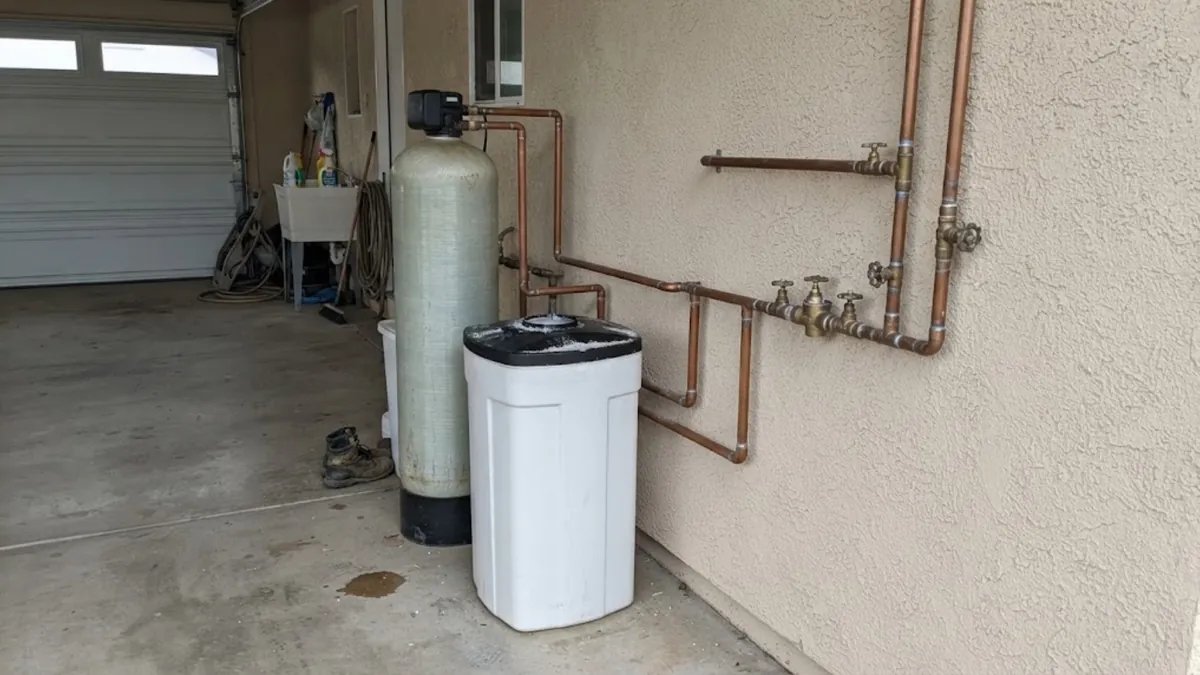
Water Softener Installation and Repair in Mission Viejo
A water softener removes the calcium and magnesium that make water hard. A salt-based unit does it by ion exchange, swapping those minerals for sodium or potassium and flushing the resin bed with brine on a schedule. The result is water that does not leave scale on fixtures, heating elements or glass.
Mission Viejo's water comes from Santa Margarita Water District, Moulton Niguel Water District and El Toro Water District. Supply here is largely imported. Santa Margarita Water District's 2026 water quality report, which covers 2025 data for Mission Viejo, lists average hardness of 15 grains per gallon, with readings from 12.3 to 17.5 across its system. That is why scale shows up on faucets, showerheads and water heaters across the city.
My Softener Is Not Working Right and I Want the Whole System Checked
People call about softeners for two reasons: the water has turned hard again, or the system is noisy, wet around the base or using salt too fast. Both have fixable causes, and a plumber should check the whole system before quoting a replacement.
A salt bridge is a hard crust that forms in the brine tank and keeps salt from dissolving. A fouled resin bed no longer exchanges minerals. A stuck control valve or failed injector disrupts regeneration. A clogged drain line can flood the floor.
A service visit tests the hardness of the water coming out, inspects each of these parts, and tells you which repair is worth making and which means it is time for a new unit.
Softener Symptoms and Likely Causes
| Symptom | Likely cause | Usual fix |
|---|---|---|
| Water is hard again | Salt bridge, empty brine tank or fouled resin | Break the bridge, refill salt, clean or replace resin |
| Salt level never drops | Salt bridge or a regeneration fault | Clear the bridge, check the control valve |
| Standing water in the brine tank | Blocked drain or injector | Clear the line and clean the injector |
| Leak at the base | Failed valve seals or tank crack | Replace seals or the tank |
| Noise or constant running | Control valve or drain flow problem | Inspect and replace valve parts |
Check the Rules Before Installing a Salt-Based Softener
California law lets local agencies restrict self-regenerating water softeners because their brine adds salt to wastewater, which matters for recycled water. Mission Viejo irrigates over 500 acres of parks and slopes with reclaimed water, according to the City of Mission Viejo.
Rules vary by agency and change over time. Ask your district what applies before you buy, and the plumber can tell you about alternatives such as salt-free conditioners or a service-exchange tank that is regenerated off site.
Any softener install must meet the California Plumbing Code, built on the Uniform Plumbing Code (UPC), including a proper drain connection with an air gap and a bypass valve.
How an Installation Goes
Test
The plumber tests hardness and checks the main line, drain and electrical outlet.
Size
The unit is sized by hardness and the number of people in the home.
Install
The softener goes in with a bypass valve and an air-gapped drain connection.
Set up
The control head is programmed, salt is loaded and the first regeneration is checked.
What a Water Softener Costs
Cost depends on the type, the capacity and whether the existing plumbing and drain are ready. A repair to a control valve costs far less than a new unit, and a diagnosis comes first.
A softener is a home improvement and is not covered by insurance. A tank leak that damages the floor may be covered if it was sudden.
Softener, Heater and Fixtures
A softener protects the equipment that scale damages most. It extends the life of a tank heater and reduces descaling needs on a tankless one, as covered in tankless water heater service. For drinking water taste, a water filtration system adds a separate step, since a softener does not remove chlorine.
Scale-clogged faucets are a faucet and sink repair job. We install softeners in nearby Rancho Santa Margarita too.
Where We Work Across Mission Viejo
Hardness is a citywide topic, with Santa Margarita Water District reporting an average of 15 grains per gallon. The question comes up in Casta del Sol, Palmia, Painted Trails and Pacific Hills alike.
Check association rules first. Some Mission Viejo communities limit salt-based units, and the district may as well, so read filtration options if a softener is not allowed.
Water Softener Questions
White scale on fixtures, spotty glasses, soap that will not lather and short-lived water heaters are common signs. A hardness test confirms it, and your district's annual water report lists hardness.
The usual causes are a salt bridge, empty salt, a fouled resin bed or a control valve fault. A service visit tests the water and checks each part.
Local agencies can restrict salt-based softeners. Ask your district what applies before you buy.
No. A softener removes hardness minerals. A carbon filter removes chlorine and taste, which is a different system.
Many last 10 to 15 years with maintenance. Resin and control valves are the most common parts to replace.
Scale on Every Fixture?
Call the Mission Viejo line to test your water and price a softener.
☎ Call (949) 325-3122