Seven Signs of a Slab Leak in a Single-Story Mission Viejo Home
A leak under a concrete floor gives only small clues. These seven are the ones worth acting on.
Key Takeaways
- A slab leak is a leak in a supply line under or inside a concrete foundation, so the clues show up above it.
- The most reliable signs are a warm floor spot, a meter that moves with everything off, and the sound of running water.
- You can confirm much of it yourself with a meter test before anyone cuts a floor.
- Repair choices range from a small spot repair to rerouting the line overhead.
Why Single-Story Homes Get Slab Leaks
A slab leak happens where the water supply pipes run under or through the concrete slab that forms the floor of the house. Single-story houses on slabs are the typical setting, and many Mission Viejo homes fit that description. Casta del Sol, a gated 55+ community, alone has 1,927 mostly single-story homes built between 1972 and 1987.
Pipes in that age range have decades of service behind them. Copper lines under a slab sit in contact with concrete and soil, and the pipe wall can thin from the outside or inside until a pinhole opens. Hot water lines tend to be especially prone, because heat and constant flow can wear the pipe faster.
The leak itself stays hidden. What you notice are the effects above it: heat, moisture, sound, smell and a higher bill. The seven signs below are the effects that show up most often.
Signs of a Slab Leak, Ranked by How Reliable They Are
1. A warm spot on the floor
A hot water line leaking under the slab can warm the concrete above it. You notice it through bare feet or socks, often in a hallway or kitchen.
2. The meter moves with everything off
With every fixture and appliance shut off, a moving meter means water is escaping somewhere on the supply side.
3. The sound of running water
A hiss or trickle in a quiet house, with no fixture running, is a strong clue that pressurized water is escaping.
4. A sudden jump in the water bill
Usage that climbs with no change in habits is the cost showing up on paper.
5. Damp flooring or baseboards
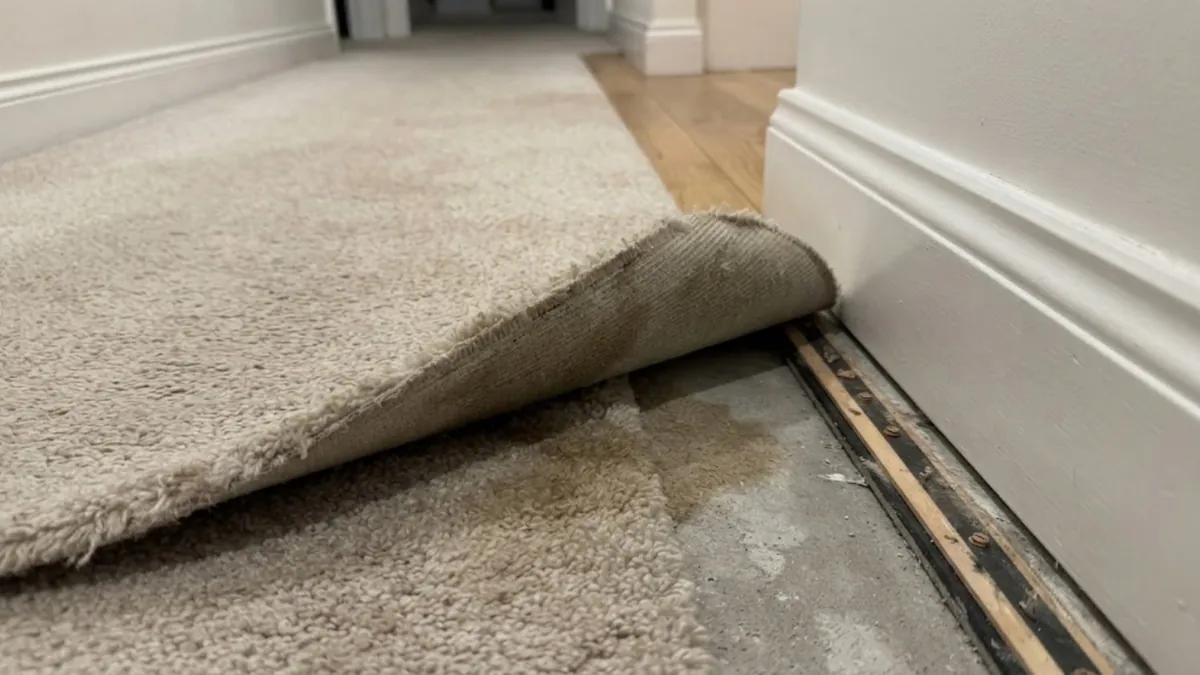
Cupped hardwood, lifting carpet, stained baseboards or a wet spot at the base of a wall can trace back to the slab.
6. A musty smell or mold
Persistent dampness under flooring grows mold, and the smell can reach the room before you see anything.
7. Low pressure or a water heater that never stops
A leak on the hot side can make the heater run constantly and cut pressure at the taps.
How to Confirm a Slab Leak Before Anyone Cuts a Floor
- Turn off every fixture, appliance and irrigation timer, then record the meter and wait two hours. Any change means a leak.
- Close the main shutoff at the house. If the meter stops, the leak is inside the house or under the slab, not on the buried line.
- Shut off the hot side by closing the cold supply valve to the water heater. If the sound or the warm spot fades, the leak is on the hot line.
- Walk the floors barefoot and mark any warm patch with painter's tape.
- Stop there. Do not cut flooring yourself, because the wet spot is often not above the leak.
What Else Can Look Like a Slab Leak
| Symptom | Slab leak cause | Other possible cause |
|---|---|---|
| Meter moves with fixtures off | Supply line leak under the slab | A running toilet, an irrigation leak or a leak on the buried service line |
| Warm floor | Hot water line leak | In-floor heating, sun through a window or a ducted heater beneath |
| Musty smell | Constant moisture under flooring | A plumbing drain leak, a roof leak or high humidity |
| Damp baseboard | Water wicking up from the slab | A roof leak, a shower seal or exterior drainage |
Repair Options and What Decides the Choice
Once the leak is pinpointed with listening gear and thermal imaging, there are three common paths. A spot repair opens a small section of the slab, replaces the damaged pipe and patches the concrete. Rerouting abandons the leaking line and runs a new one through the attic or walls. Repiping replaces the supply system in the whole house.
The choice depends on how many leaks the pipe has had, how old the copper is and what is on top of the leak, such as tile or hardwood. Our slab leak detection and repair page explains each option and what drives the price. If you only know the meter is moving, leak detection separates a slab leak from a leak elsewhere.
A pattern of leaks over time usually means the pipe is wearing out everywhere, not just at one spot. In that case a repipe can cost less than repeated repairs.
What Insurance Usually Does and Does Not Pay For
Policies differ, but many treat a sudden leak and the damage it causes differently from a leak that runs slowly for months. Many also cover the cost of tearing out part of the floor to reach a leaking pipe, while excluding the pipe repair itself.
Call your insurer before work begins. Photograph the damage, note when you first saw signs, keep any water bills and save the failed pipe section if the plumber removes it. Those records help a claim.
The same 24/7 team covers nearby Laguna Hills homes with the same approach.
Reducing the Odds of the Next Leak
No one can stop copper from aging, but a few habits reduce stress on it. Have a plumber check your water pressure, since pressure above 80 psi is hard on pipe, and the Uniform Plumbing Code (UPC) calls for a regulator at that level. Fix dripping fixtures and running toilets, which keep the system cycling.
Hard water is part of the picture too. Santa Margarita Water District reports about 15 grains per gallon in its system, and scale builds up in hot water lines and fittings. A softener or yearly heater service reduces the buildup, though it does not make old pipe new.
If you have had one slab leak, ask the plumber to assess the rest of the line. Two leaks in the same system are a pattern, and a decision about rerouting or repiping is easier before the third one arrives.
Slab Leak Questions
They occur in any home with supply pipes under a slab, and age raises the odds. Homes from the 1970s and 1980s have copper that is now several decades old.
You can confirm that you have a leak with the meter test and narrow it with the hot-side check. Pinpointing the exact spot needs listening gear and thermal imaging.
A long-running leak can wash out soil beneath the slab and cause settling. That is why a confirmed leak should be fixed promptly.
Yes. Closing the main shutoff stops the loss while you arrange a visit, and it protects the floor.
Think You Have a Slab Leak?
Call the 24/7 Mission Viejo line. Close the main shutoff while you wait.
☎ Call (949) 325-3122