Tree Roots in Your Sewer Line: Signs, Fixes and How to Stop Them Coming Back
Roots do not break pipes so much as find the gaps already there. Here is how to spot them and what actually fixes the problem.
Key Takeaways
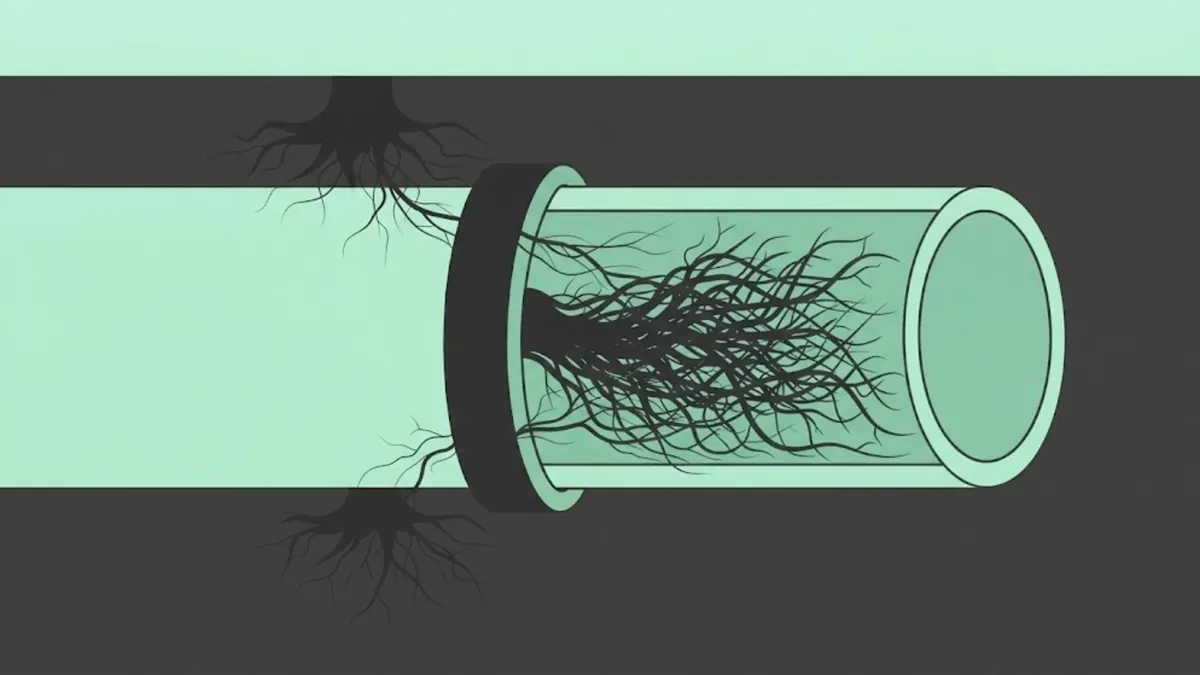
- Roots enter sewer laterals through joints and small cracks, seeking water and nutrients, and then grow into a mass that catches waste.
- A camera inspection shows whether roots are the cause and whether the pipe is cracked.
- Cutting or jetting clears the roots, but only repair, lining or replacement closes the opening they used.
- Mission Viejo's mature trees and its 1960s to 1980s sewer lines make this a common local call.
How Roots Get Into a Sewer Pipe
A sewer lateral carries warm, nutrient-rich wastewater, and the pipe leaks a little vapor and moisture at every joint. Roots sense that moisture and grow toward it. A hair-thin root can slip into a joint or hairline crack, then thicken as it feeds on the flow inside.
Over months the roots form a mass that traps toilet paper, grease and solids. The first sign is a slow drain. The next is a clog that clears and returns. Left alone, the mass can also widen the opening and crack the pipe.
Mission Viejo was planned in 1963, and the first families moved in during 1966. The trees planted along its streets and slopes since then are now mature, and the laterals beneath them are 40 to 60 years old, so the two have had time to meet.
Signs Roots May Be in Your Line
Repeat clogs
The line clears, then clogs again within weeks or months, often in the same fixtures.
Gurgling and slow drains
Several fixtures act up together, which points to the shared lateral.
Sewer smell outside
An odor near the cleanout or a green, soggy patch in the yard can mean a leak in the buried pipe.
Backups in the lowest drain
Water in a tub or floor drain when the washing machine empties means the main line cannot keep up.
Ways to Deal With Roots, From Temporary to Permanent
| Option | What it does | Limits |
|---|---|---|
| Cable machine with a cutter | Cuts a channel through the root mass | Roots grow back, often within a year or two |
| Hydro jetting | Scours roots and buildup from the pipe wall, see hydro jetting | Needs a sound pipe, and the entry point stays open |
| Chemical root treatment | Slows regrowth inside the pipe | Check with your district first, since some discourage certain chemicals |
| Spot repair | Replaces the section where roots entered, see sewer line repair | Fixes one joint, not the rest of the line |
| Pipe lining | A resin liner seals joints and cracks from the inside | Needs a pipe that still holds its shape |
| Replacement | A new lateral with tight joints, see sewer line replacement | Highest upfront cost, longest result |
Why You Should See the Pipe Before Choosing
A camera inspection shows where the roots enter, how much of the line they occupy and whether the pipe is cracked, offset or bellied. Without that picture, a plumber is guessing between a cheap cut and a major repair. Our sewer camera inspection page explains what the footage shows.
A good report records distances so you can find each defect later. If roots enter at a single joint, a spot repair may end the problem. If they enter at many joints along an old line, lining or replacement usually costs less than repeating cuts every year.
Repairs must meet the California Plumbing Code, which is built on the Uniform Plumbing Code (UPC), so approved pipe and joints go in. Ask the plumber to show you the footage. A clear root mass at 40 feet tells you more than any description.
Steps to Take If You Suspect Roots
- Note when each clog happened. A repeating pattern points to roots or a defect.
- Find your cleanout, often a capped pipe outside near the house, and keep the area clear.
- Do not pour chemical drain cleaners into a backed-up line. Ask a plumber before using any root treatment.
- Book a camera inspection, so the next step is based on footage.
- Ask your water district where its responsibility ends. In general the homeowner owns the lateral from the house to the main.
Reducing the Chance They Come Back
No product keeps roots out forever, but a few steps reduce the pressure. Fix leaks in the lateral, since a dry pipe is less attractive. Choose trees and plantings with care when you landscape, and keep large trees away from the line. Ask an arborist about root barriers if a mature tree sits close to the lateral.
A yearly check pays off for older lines. A camera pass before the rainy season shows roots while they are small, and routine cleaning keeps a line flowing until a repair is planned. Water districts in this area, including Santa Margarita, Moulton Niguel and El Toro, own the main in the street, so damage on their side is their concern.
Older neighborhoods nearby, such as San Juan Capistrano, face the same issue, and the same 24/7 team responds there.
What Decides the Bill for a Root Problem
A root problem is priced by how long the line is, how deep the roots reach and what the camera finds. A short stretch of fine roots near the cleanout is a quick clearing. A line with roots at five joints and a belly at the far end is a repair or replacement decision.
The surface above matters too. A lateral under a driveway or a mature tree costs more to reach, and trenchless methods can shift the balance. A plumber should give you the footage and a price before work begins, so you can compare a clearing now against a repair that stops the cycle.
Common Myths About Tree Roots and Sewer Lines
One myth is that roots break healthy pipes. They mostly enter through joints and cracks that already exist, so a tight modern line with sealed joints resists them far better than an older one. Another is that a tree has to be removed to solve the problem. Often it does not, and a repair at the entry points can keep a tree in place.
A third is that a chemical treatment is permanent. Treatments slow regrowth for a time, and they do not seal the opening. Ask for the camera footage before agreeing to any treatment, and ask your district whether it restricts the product.
Tree Root Questions
They usually enter through existing joints and cracks, then widen them as they grow. A weak or cracked pipe can be damaged further by a root mass.
It clears the clog, but roots usually grow back through the same opening. A repair, liner or replacement closes it.
Some can harm the environment or the pipe, and some districts discourage certain products. Ask a plumber and your district before using one.
Many plumbers suggest a camera look every few years for lines with a history of clogs, and before the rainy season.
Suspect Roots in Your Line?
Call the 24/7 Mission Viejo line for a camera look and a plan.
☎ Call (949) 325-3122